


Before starting the company registration process in the UAE, it is critically important to determine in advance the type of commercial real estate required, its location, and the requirements that such premises must meet from the perspective of licensing authorities, regulators, and banks.
In the UAE, the place of company registration is directly linked to the location of the commercial property. If business operations require premises in Dubai, the company must be registered in that emirate. Likewise, if the property is located on the mainland, registration in a free economic zone of another emirate is not permitted. If premises are leased outside a Dubai free zone, the company must be registered on the Dubai mainland and obtain the corresponding mainland licence.
Despite the wide availability of commercial real estate in the UAE, certain categories of premises remain in high demand. In 2026, a noticeable shortage of small warehouse and light industrial facilities has been observed in several free zones, including JAFZA, DMCC, and some industrial zones in Abu Dhabi. In some cases, waiting times for a suitable property may extend for several months, which should be taken into account when planning business launch timelines.
The cost of commercial real estate varies significantly across emirates, zones, and levels of infrastructure. For example, warehouse space in the Jebel Ali Free Zone in Dubai may cost on average 1.5-2 times more than comparable facilities in free zones in Sharjah or Ras Al Khaimah. At the same time, the higher cost is often offset by logistical advantages, access to ports, and a more favourable attitude from banks and business counterparties.
As for retail space, leasing premises in popular shopping malls in the UAE remains challenging. In addition to limited availability and waiting lists, mall management companies conduct a commercial assessment of the business concept. A prospective tenant must demonstrate that their activity aligns with the mall’s target audience and enhances its commercial appeal. In practice, this means not every licensed activity automatically qualifies for retail leasing approval.
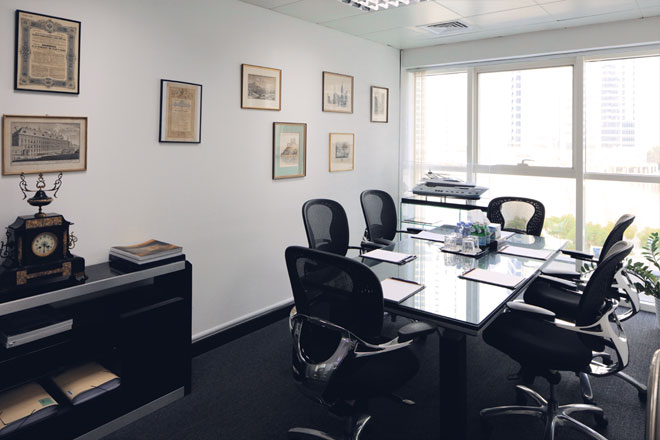
The office real estate market appears more flexible compared to retail and warehouse segments. Nevertheless, in Dubai's prestigious business districts (such as DIFC, Downtown, and Business Bay), small offices may also be in limited supply. In addition, since 2024, banks and licensing authorities have increasingly required confirmation of a physical office when opening bank accounts and passing compliance checks, particularly for companies with operational activities.
It is important to note that residential property cannot be used for commercial purposes in the UAE. Each property has a strictly defined designated use – office, retail, warehouse, or industrial – which is reflected in official documentation. Any mismatch between actual use and designated purpose may result in fines, licence cancellation, and banking issues.
When selecting a commercial property, it is essential to assess not only cost and location but also the availability of infrastructure. In certain industrial areas, limitations related to electricity supply, water availability, or road capacity may still exist. For manufacturing and logistics businesses, these factors are critical and must be analysed before signing a lease agreement.
For entrepreneurs planning to start a business with minimal initial costs, some free economic zones offer company registration using a service desk or flexi-desk (virtual office). This format remains permissible in 2026; however, it has limitations. As a rule, a service desk does not grant the right to hire employees and may be insufficient for opening a bank account with certain banks. As the business expands and staff are hired, the company will need to transition to a full office or another suitable commercial property in line with its licensed activities.